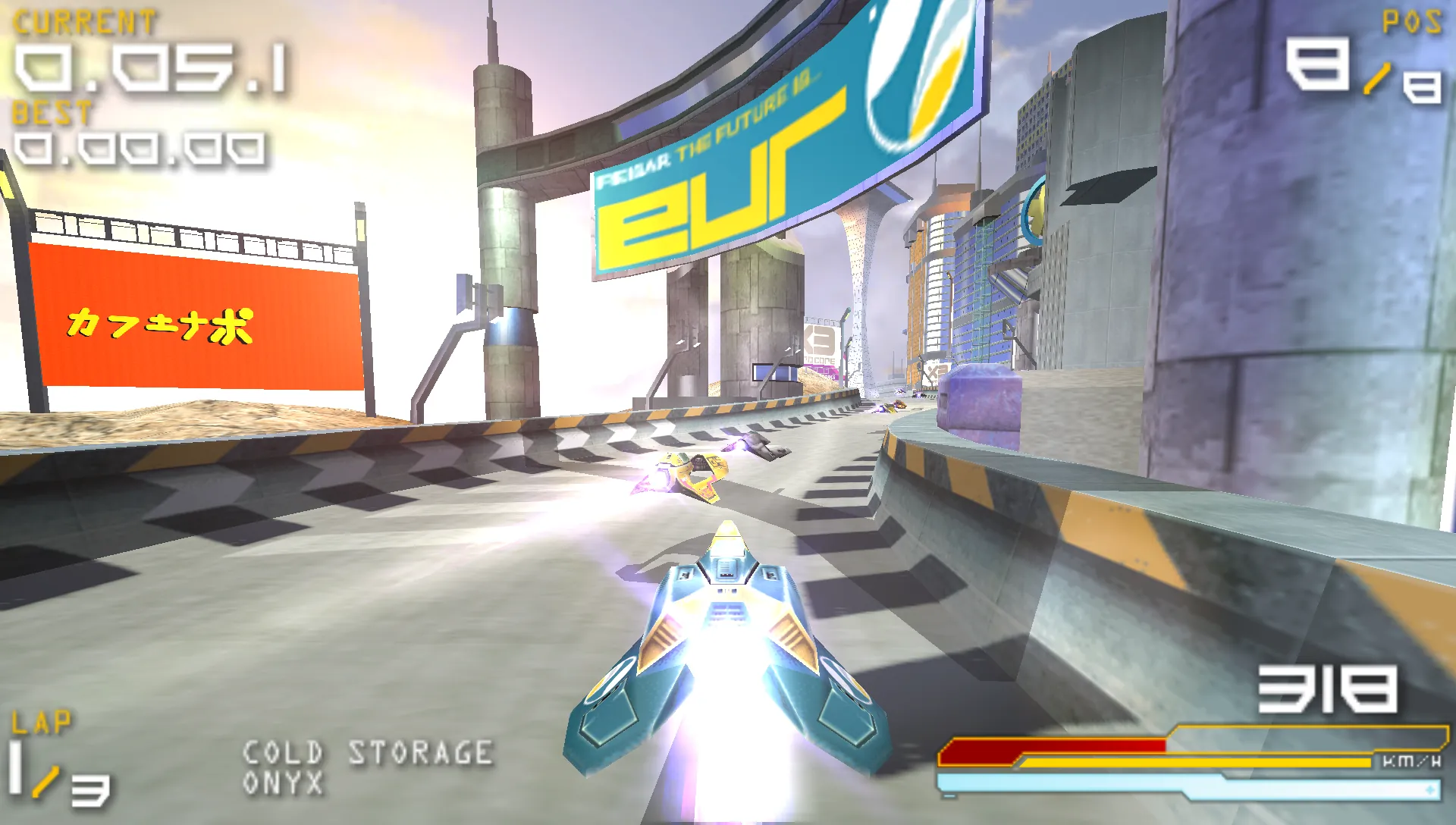
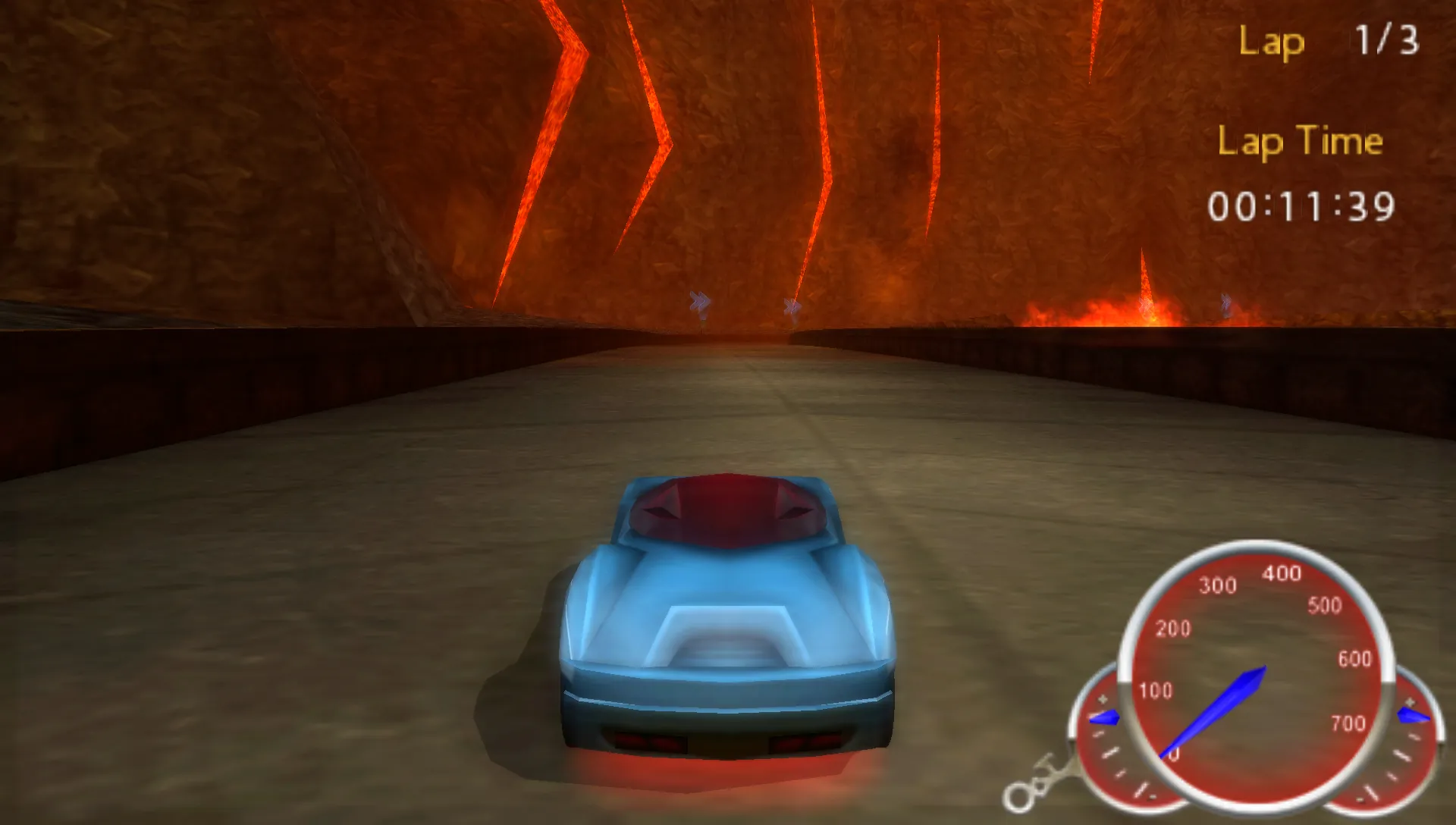
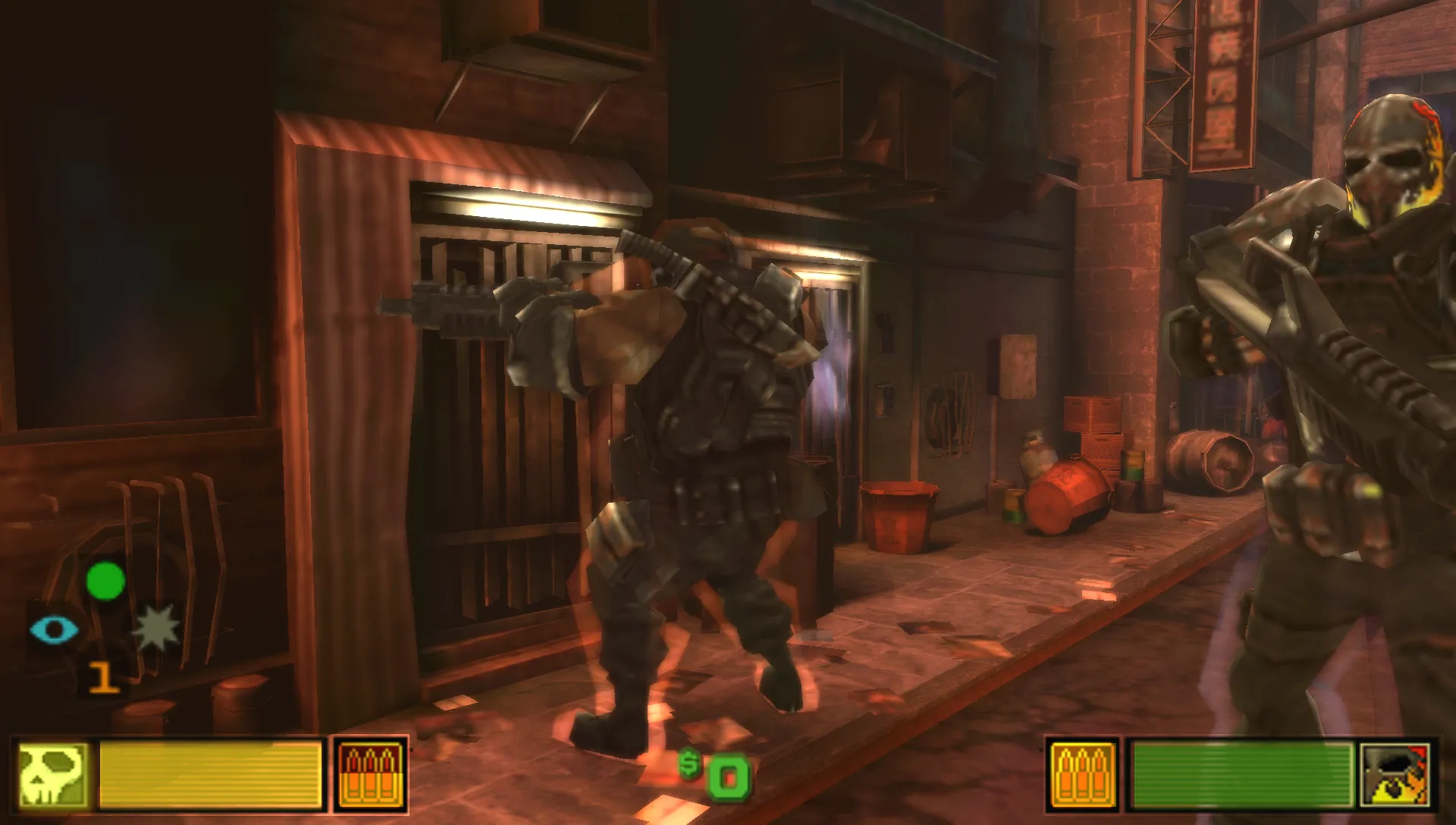
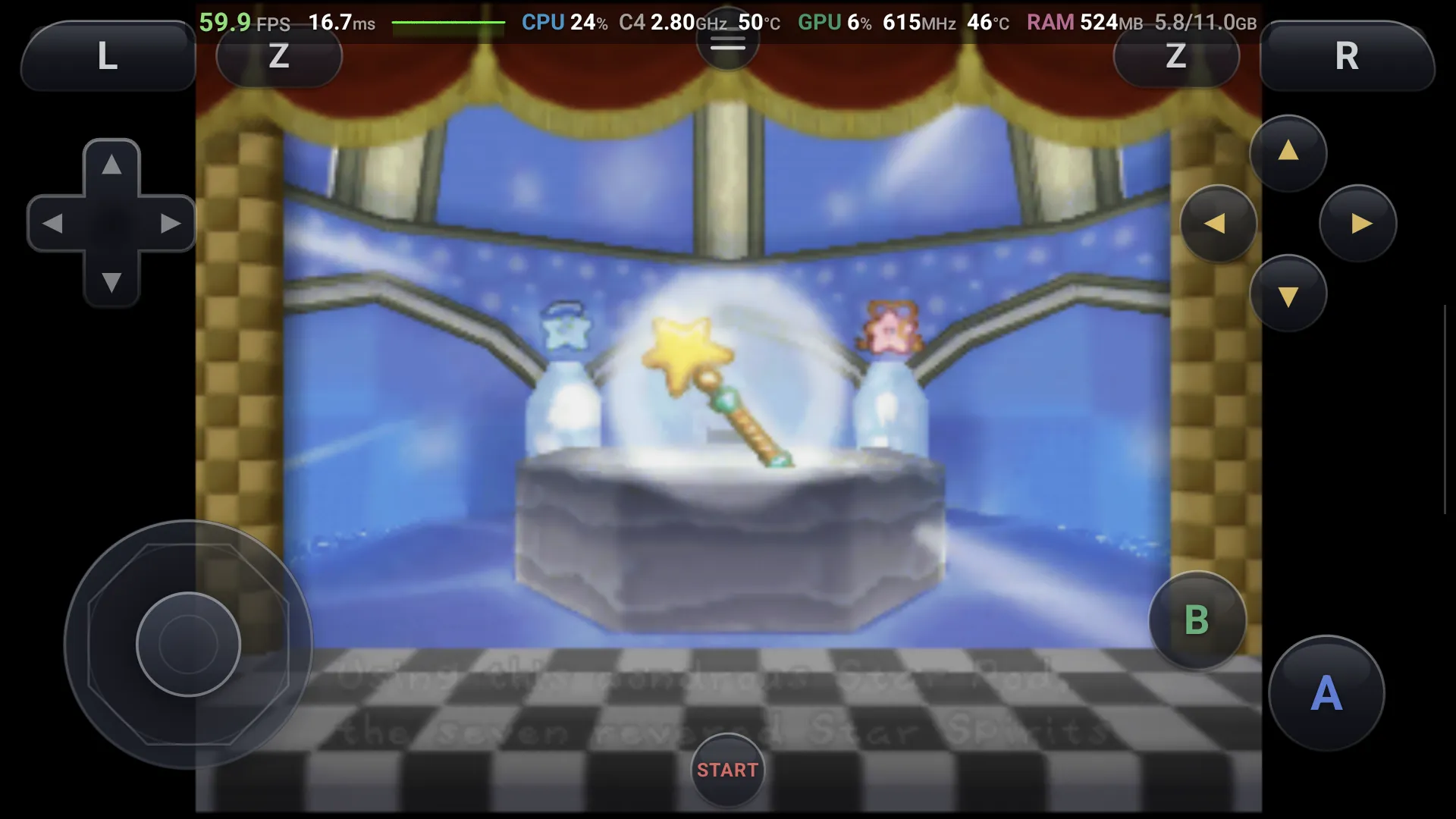
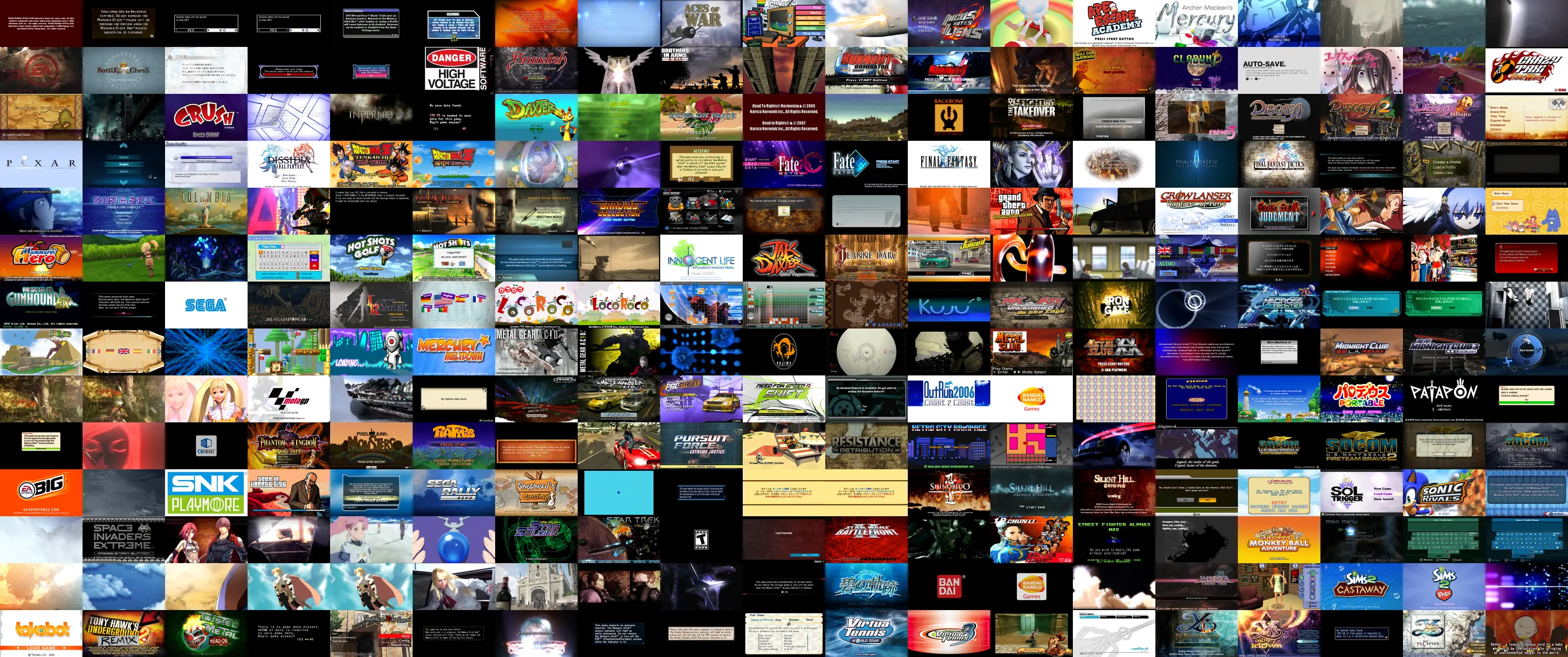
New in 2.0: a PSP core built from scratch

Phobos

A multi-system emulator built on ares.

An Android app made for handhelds and controllers, plus a desktop program for Linux, Windows and macOS. 34 systems, including the PSP, whose core is built from scratch.

  • 34systems in the library
  • 266PSP games in the test library
  • 4platforms: Android, Linux, Windows, macOS
  • 205pull requests merged since 24 Sep 2026

What it is

34 systems, made for handhelds

Phobos is built on ares, an emulator that puts accuracy first. It keeps ares's cores and adds what a handheld needs, like fast ARM64 paths, Vulkan, custom GPU drivers and a UI you drive with a controller.

Phobos's own code is free software under the GNU GPL, version 3 or later.

  • Android

    Modern build for ARMv8.2-A with FP16 and dot product, Legacy for any 64-bit ARM device. Android 8.0 or newer.

  • Linux

    An AppImage, plus a zsync file for smaller updates.

  • Windows

    Phobos.exe in a zip, for 64-bit Windows.

  • macOS

    A universal app, with MoltenVK bundled for Vulkan.

Tagged releases since v2.0.0 have all four. Nightly builds are Android only.

The library

Here's where each of the app's 34 systems stands. Arcade has two rows, one for each board.

  • Verified with games on a device29
  • Experimental (new in 2.0)1
  • Not tried with a game on a device yet5

Nintendo

  • Famicom, verified with games on a device
  • Super Famicom, verified with games on a device
  • Game Boy, verified with games on a device
  • Game Boy Color, verified with games on a device
  • Game Boy Advance, verified with games on a device
  • Super Game Boy, verified with games on a device
  • Nintendo 64 with 64DD, verified with games on a device

Sega

  • SG-1000, verified with games on a device
  • Master System, verified with games on a device
  • Game Gear, verified with games on a device
  • Mega Drive, verified with games on a device
  • Mega CD, verified with games on a device
  • Mega 32X, verified with games on a device
  • Mega CD 32X, not tried with a game on a device yet

Sony

  • PlayStation, verified with games on a device
  • PlayStation Portable core built from scratch, experimental (new in 2.0)

NEC

  • PC Engine, verified with games on a device
  • PC Engine CD, verified with games on a device
  • SuperGrafx, verified with games on a device

SNK

  • Neo Geo MVS and AES, verified with games on a device
  • Neo Geo CD, verified with games on a device
  • Neo Geo Pocket, verified with games on a device
  • Neo Geo Pocket Color, verified with games on a device

Bandai and Benesse

  • WonderSwan, verified with games on a device
  • WonderSwan Color, verified with games on a device
  • Pocket Challenge V2, not tried with a game on a device yet

Pioneer LaserActive

  • Mega LD, not tried with a game on a device yet
  • PC Engine LD, not tried with a game on a device yet

Computers, consoles and arcade

  • Atari 2600, verified with games on a device
  • ColecoVision, verified with games on a device
  • MSX, verified with games on a device
  • MSX2, verified with games on a device
  • ZX Spectrum 48K and 128K, verified with games on a device
  • Arcade (Aleck64), verified with games on a device
  • Arcade (SG-1000A), not tried with a game on a device yet

Highlights

What makes it fast and accurate

The big stuff so far.

Experimental, new in 2.0

A PSP core built from scratch

It's written in ares's style from PSP docs, tests and real PSP measurements, with no code from other PSP emulators. PPSSPP was only a reference.

  • No firmware needed, since Phobos emulates the PSP's system software.
  • The CPU runs through a recompiler on ARM64 and x86-64, with an interpreter behind it.
  • Three renderers, with Vulkan going up to 10x the PSP's 480x272.
  • ISO, CSO, ZSO, DAX, JSO and CHD discs open as they are, and save states keep loading across builds.
197 of 266PSP games reach a menu or gameplay within a minute (11 Oct run)
13 daysfrom the PSP core's first code to v2.4.0, its fifth release

How the core works

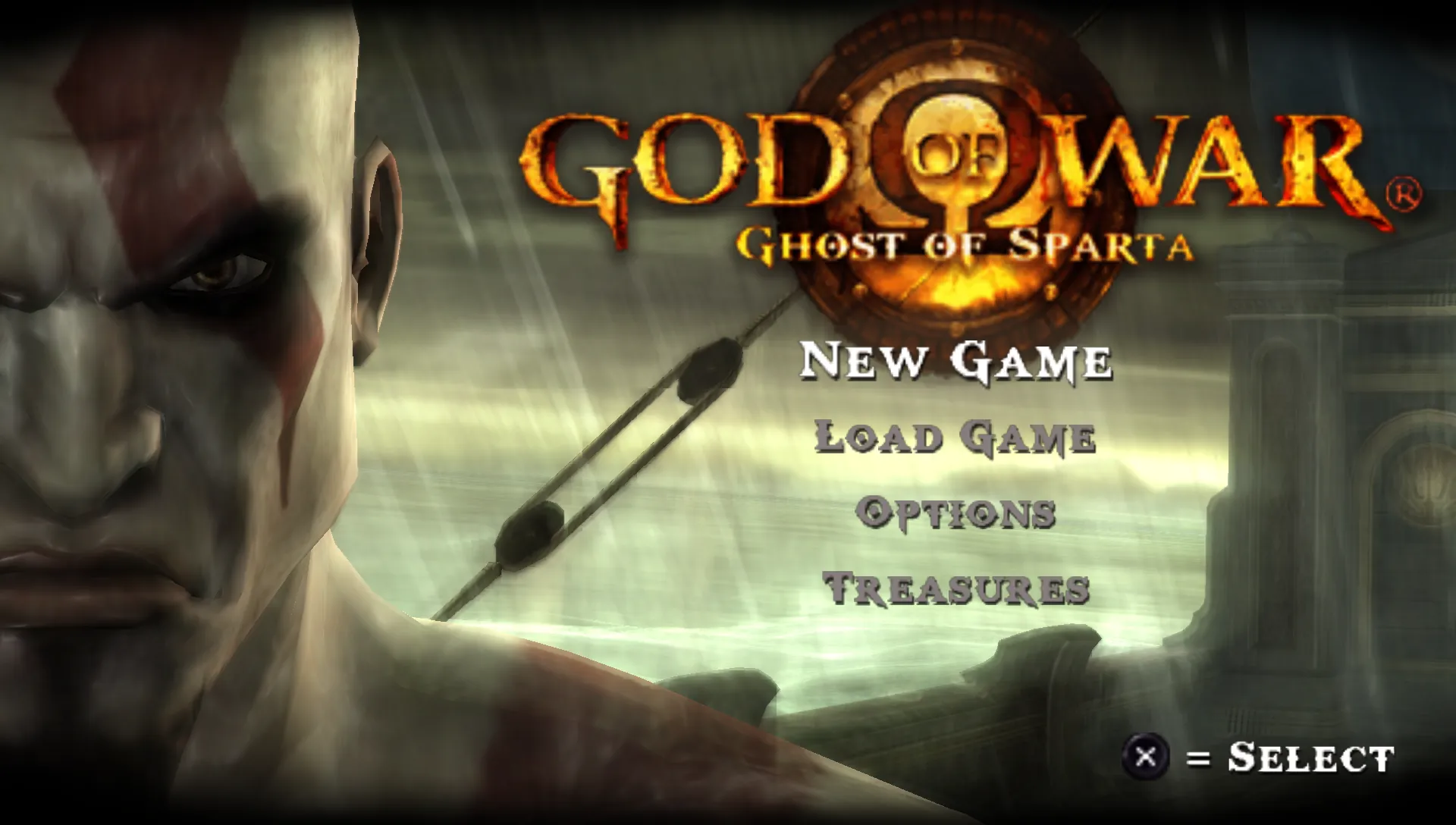
God of War: Ghost of Sparta's main menu at 4x

Measured

Timed against a real PSP-1000

Since 19 October, the PSP's graphics chip (the GE) takes about as long as my PSP-1000 did on the same work (#269). "Fast" still gives you Sony's peak rates.

  • Later rounds measured how the PSP's CPU slows the GE (#279, #291).
  • Real games captured on the same PSP check the result (#291).
  • Any timing change runs against all 266 test games before it merges.
3,373display lists timed on my PSP-1000 to fit the GE timing
5.0%median miss of the fit (#269)
8 of 8judged scenes within 15% of the PSP over a whole frame (#291)

PSP core notes, parts 103 to 115

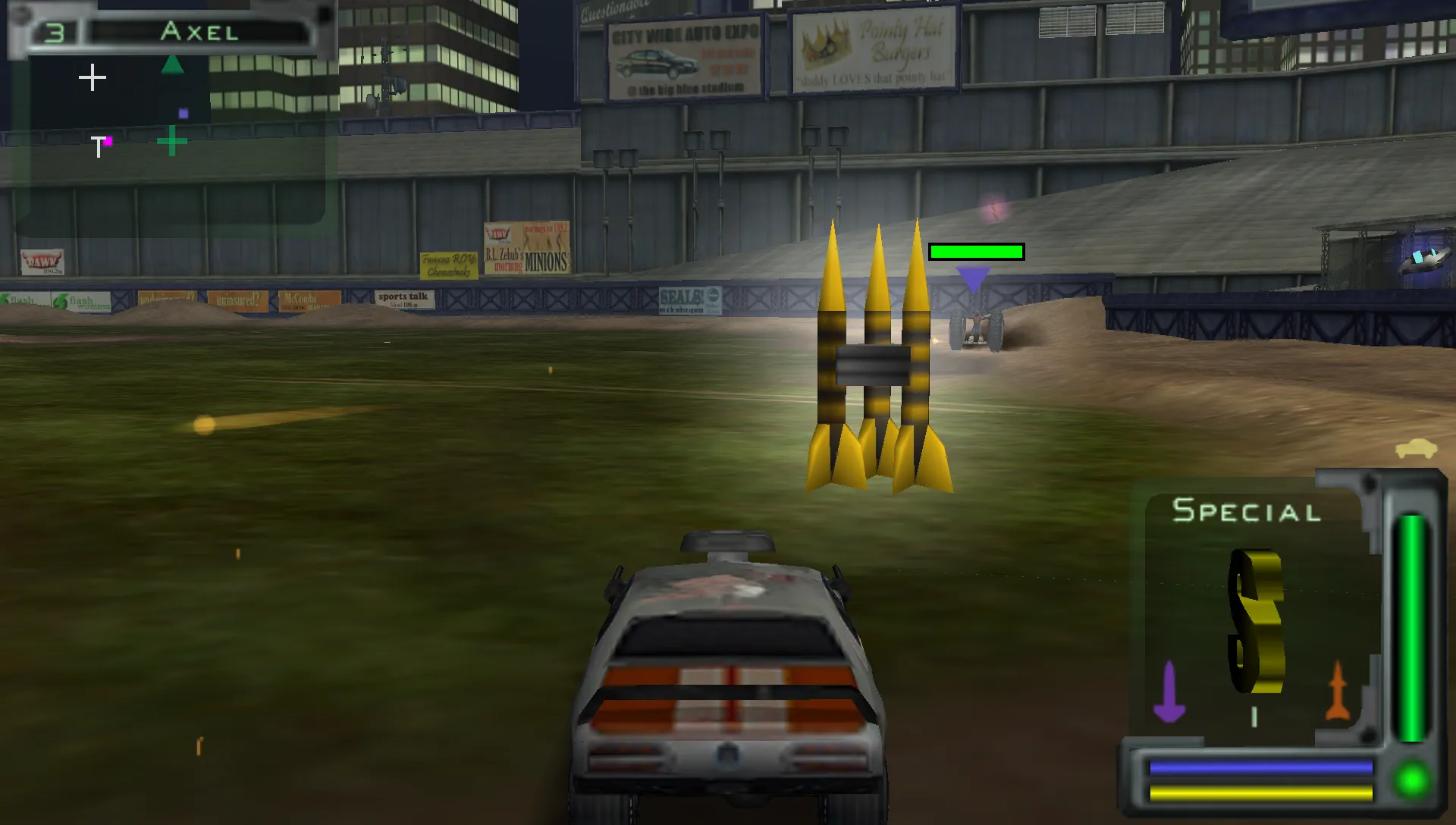
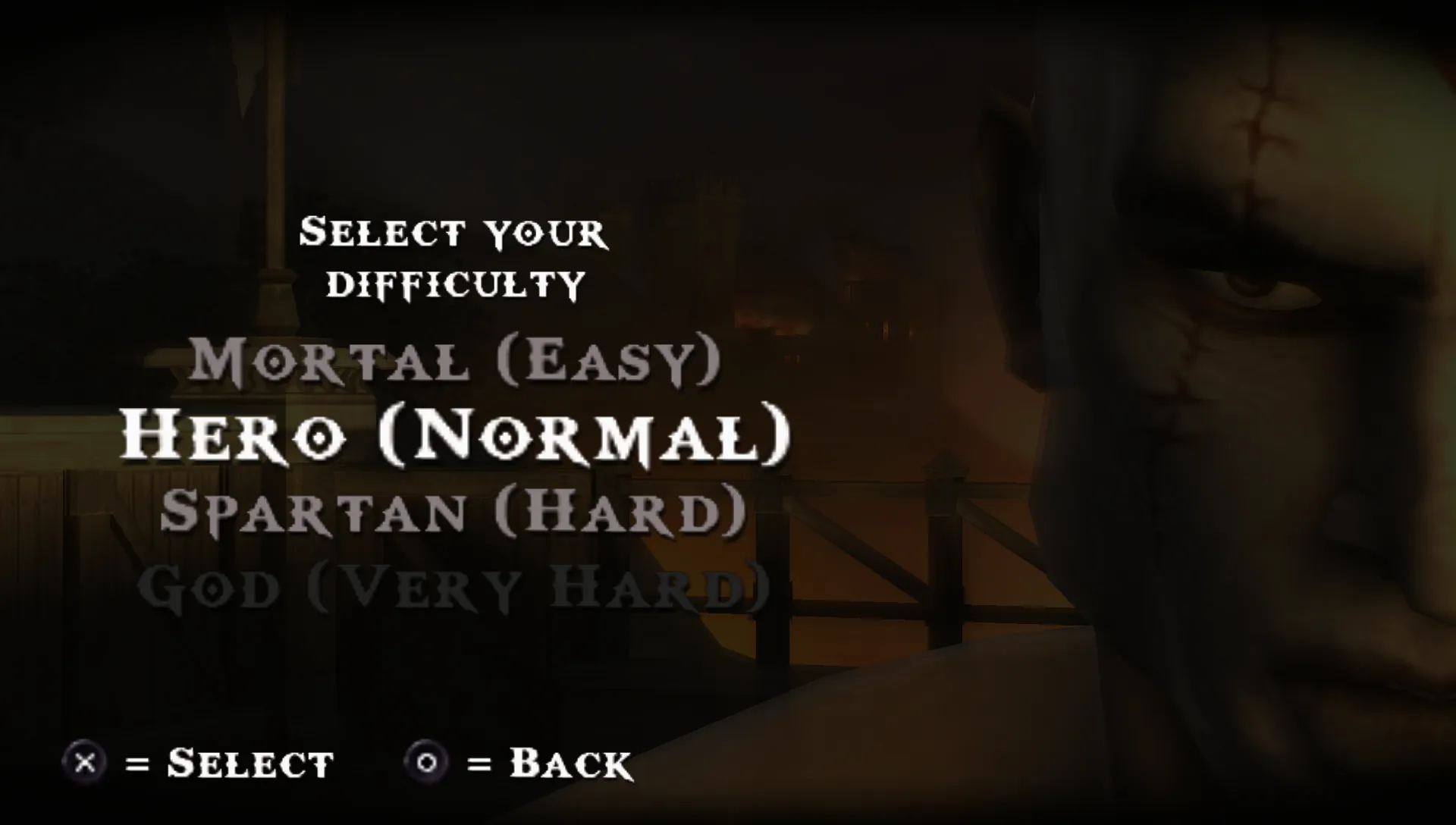
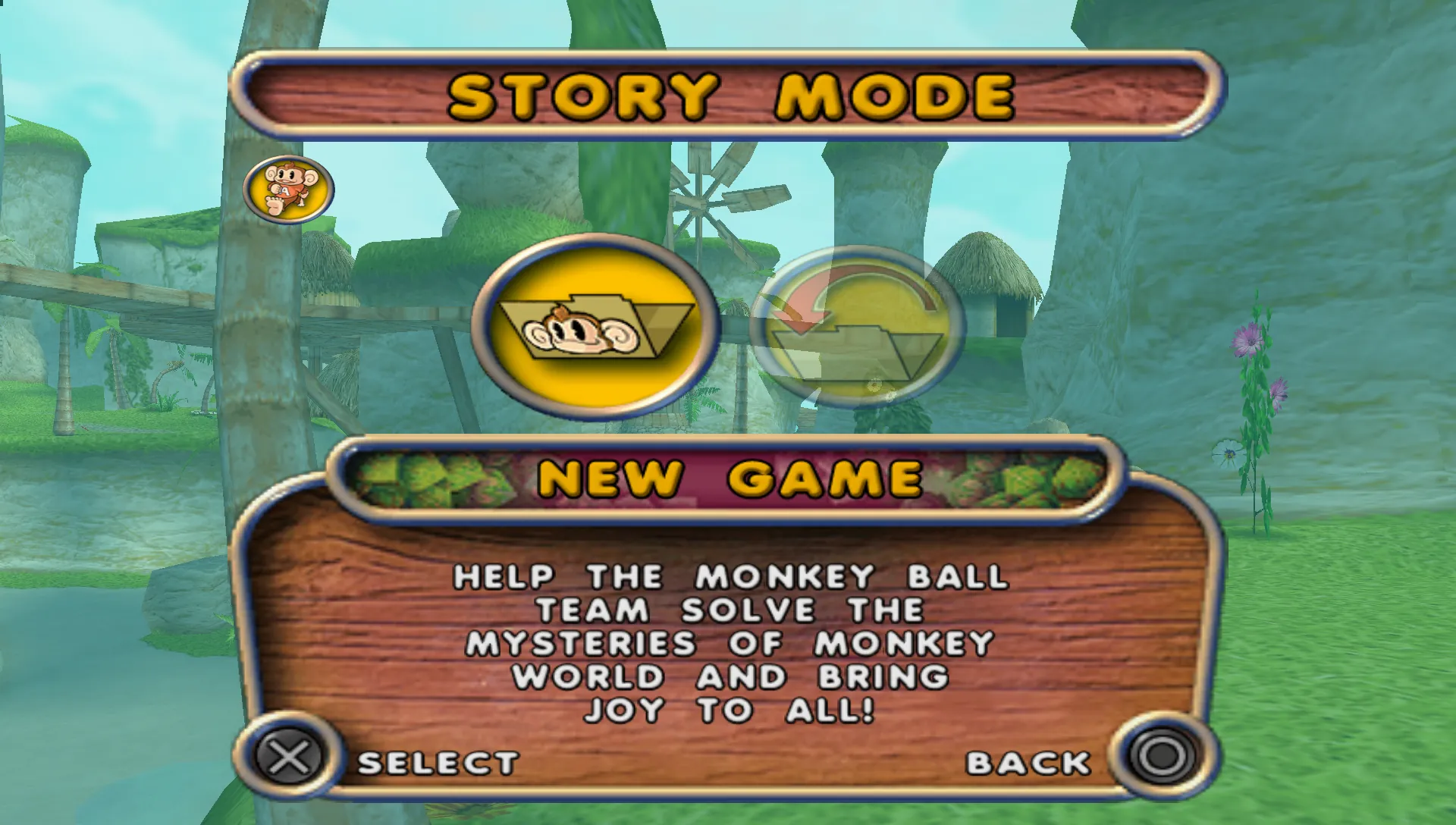
GE time per frame in Phobos against my PSP-1000All eight judged scenes are within 15 percent of the PSP-1000's frame time, between 12.69 percent faster for Super Monkey Ball and 9.95 percent slower for Activision Hits' 3D menu.−15%+15%← faster than the PSPslower than the PSP →Chains of Olympus, difficulty menu−0.87%Ghost of Sparta, main menu−1.66%Super Monkey Ball, Story Mode−12.69%Killzone, the courtyard (capture 1)−11.82%Killzone, the courtyard (capture 2)−10.38%Activision Hits, 3D main menu+9.95%Activision Hits, 3D main menu, idle+9.61%Activision Hits, copyright screen−5.80%GE time per frame in Phobos against my PSP-1000All eight judged scenes are within 15 percent of the PSP-1000's frame time, between 12.69 percent faster for Super Monkey Ball and 9.95 percent slower for Activision Hits' 3D menu.−15%+15%Chains of Olympus, difficulty menu−0.87%Ghost of Sparta, main menu−1.66%Super Monkey Ball, Story Mode−12.69%Killzone, the courtyard (capture 1)−11.82%Killzone, the courtyard (capture 2)−10.38%Activision Hits, 3D main menu+9.95%Activision Hits, 3D main menu, idle+9.61%Activision Hits, copyright screen−5.80%← faster than the PSPslower than the PSP →
Each scene's GE time for a whole frame in Phobos against my capture of it on my PSP-1000, from the gate table in part 115 of docs/psp-core.md (#291). The shaded band is the 15% limit.

N64

A fast N64, even on the stock driver

It's ares's N64 core on parallel-RDP and Vulkan, with the recompilers tuned for ARM64.

  • It has 1x to 4x upscaling, the 64DD, Rumble and Controller Paks, and Turnip drivers from the app's GPU Driver Manager.
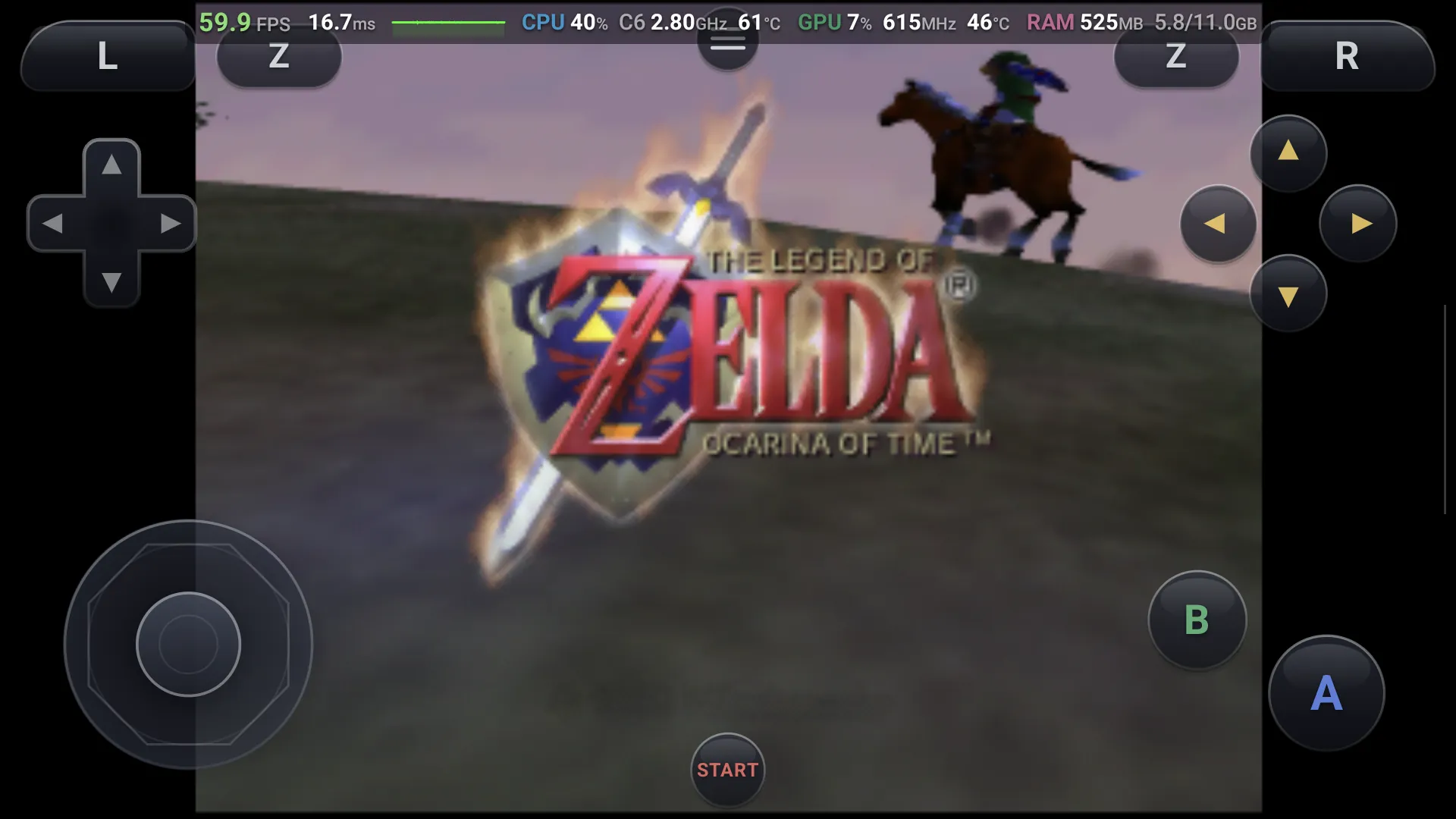
  • Since 21 October, N64 games also run on the RP6's stock Qualcomm driver, at a median 59.9 fps in the four games checked (#292).
Ocarina of Time before the fix, black under a driver warning
Before Without #292, a black screen
Ocarina of Time after the fix, at 59.9 fps
After With #292, on the same driver

Retroid Pocket 6

Full speed on a handheld

Measured along the way on my Retroid Pocket 6, a Snapdragon 8 Gen 2 handheld.

  • The 5x runs are two minutes from launch, so they're mostly logos, intros and menus.
  • On 6 October, drawing on several threads took the software renderer from 10.6 to 60 fps on Peace Walker's title screen.
18 of 22slow PSP games at full speed at 1x by 15 Oct, up from 7 in v2.3.0
232 of 266PSP games at 59+ fps at 5x, in two-minute runs from launch
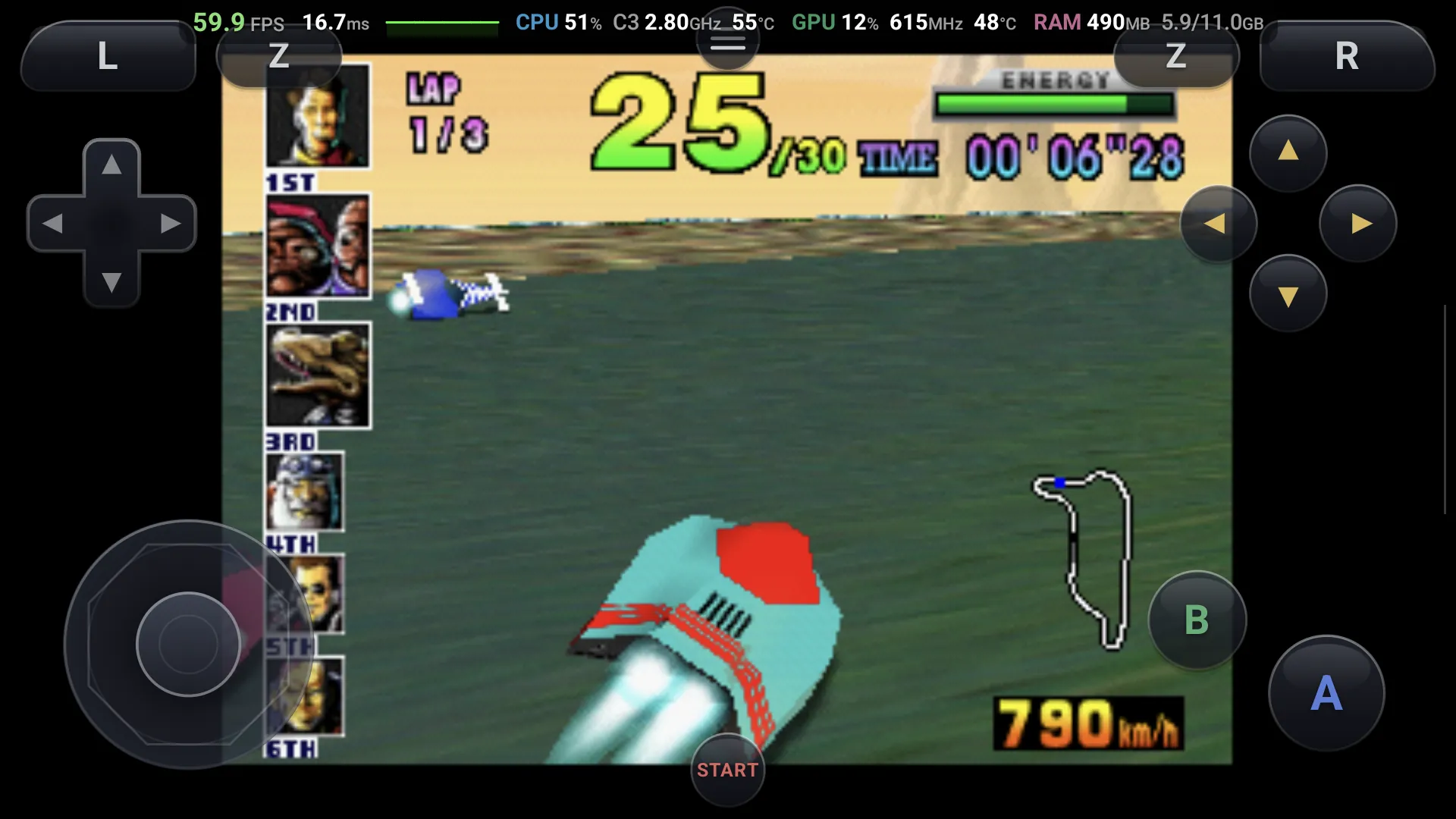
F-Zero X at 59.9 fps on a Retroid Pocket 6

The app

Made for controllers, with lots of themes

The D-pad and stick move a visible focus, and the shoulder buttons switch tabs (#51). Touch controls get a layout per system.

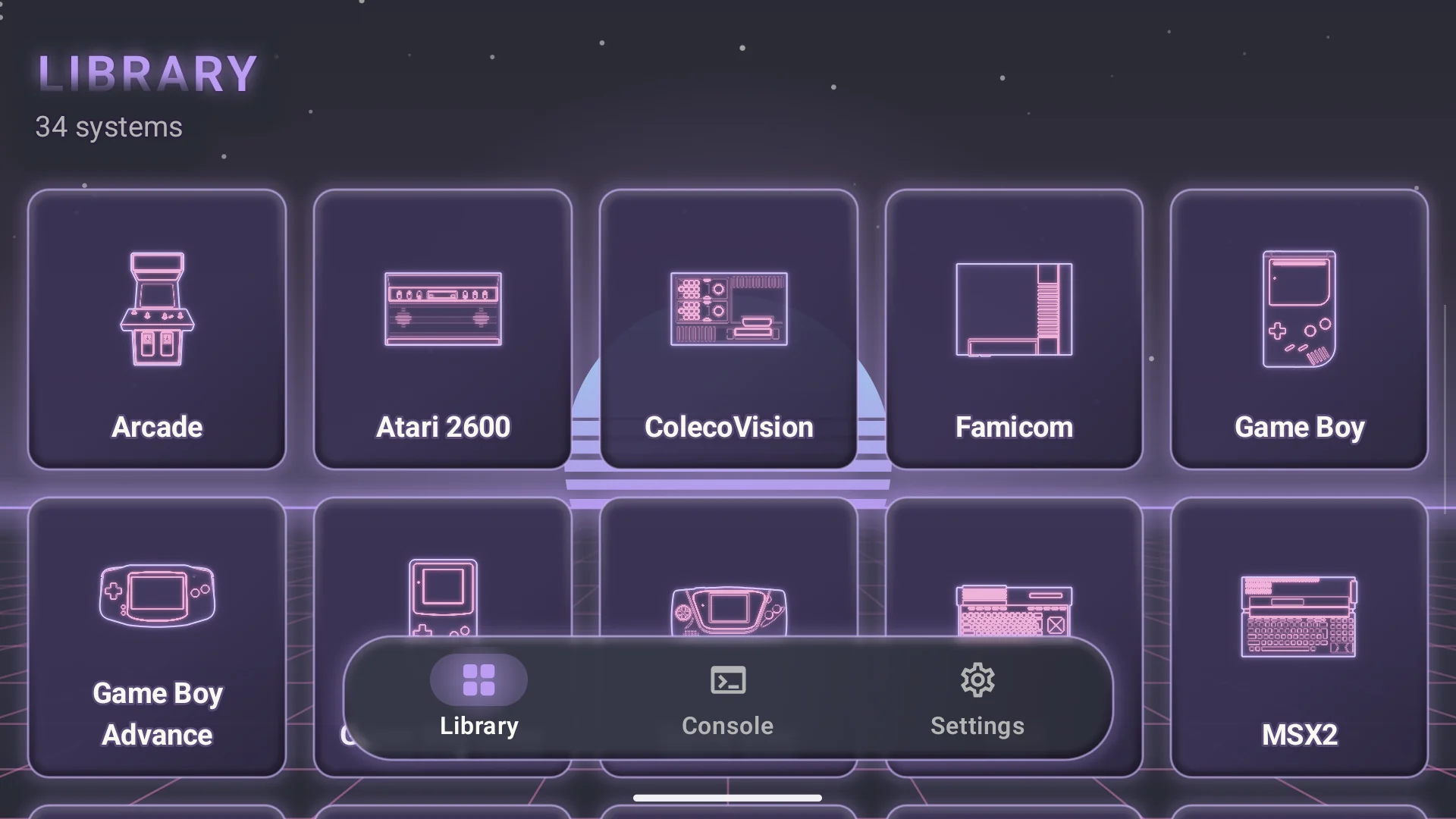
  • 13 themes, like Dracula, Monokai, Rosé Pine and Synthwave '84, plus glass, retrowave neon and an XMB-style backdrop. The default, Phobos, is in this site's colours (#314).
  • A performance overlay, and control remapping per game, per console or for everything.
  • Screenshots pop out as a film-strip card and hop into a folder (#273).
The Phobos Library on a Retroid Pocket 6, with neon console tiles over a retrowave sun

In the core

The GE on a separate thread

The GE's front end can run on a separate thread beside the emulated CPU, with identical results.

  • With it on, Killzone's emulation thread drops from 149 to 74 million host instructions a frame (#272, #277).
  • It's off by default. The app's "PSP Graphics Overlap" switch is built, and shows up once On beats Off on my RP6.

Builds

It updates itself

Settings → About updates the app from GitHub, from tagged releases or nightlies.

  • Build numbers come from git history, locally and on CI.

History

The story so far

How Phobos got here. Dates are US Eastern.

  1. 2004 to 2026

    Roots in ares, higan and bsnes

    Phobos started from ares, which goes back through higan to bsnes in 2004. ares puts accuracy first and trades some speed for clear code.

    Phobos keeps the cores that way and adds faster paths around them. None of it would exist without Near, the ares team and everyone credited below.

  2. July and August 2026

    Taking it to Android

    It started off as a desktop to Android port of ares

    Gary

    ares is a desktop program. Phobos forked it in July 2026 and took it to Android, swapping ares's desktop front end for a Kotlin and Jetpack Compose app.

    The N64 recompilers and Vulkan renderer got ARM64 work, and v1.0.0 came out on 20 August 2026 with the Neo Geo core and a GPU Driver Manager for Mesa's Turnip driver.

  3. September 2026

    A faster N64 and a new look

    On 15 September we set the ground rules. Speed claims need a measurement, and changes need an independent review before they merge.

    Then came four days on the N64, all measured on my Retroid Pocket 6. Dispatcher trips fell from 10.1 to 0.6 million a second (#10), and a Mario Tennis scene went from 82 late frames to 5 (#17).

    The app got its look at the same time, with 37 themes (#9), a performance overlay (#5) and a glass dock (#20). v1.1.0 came out on 28 September.

    On 29 September we put a PSP core on the plan, one to rival PPSSPP in compatibility and speed.

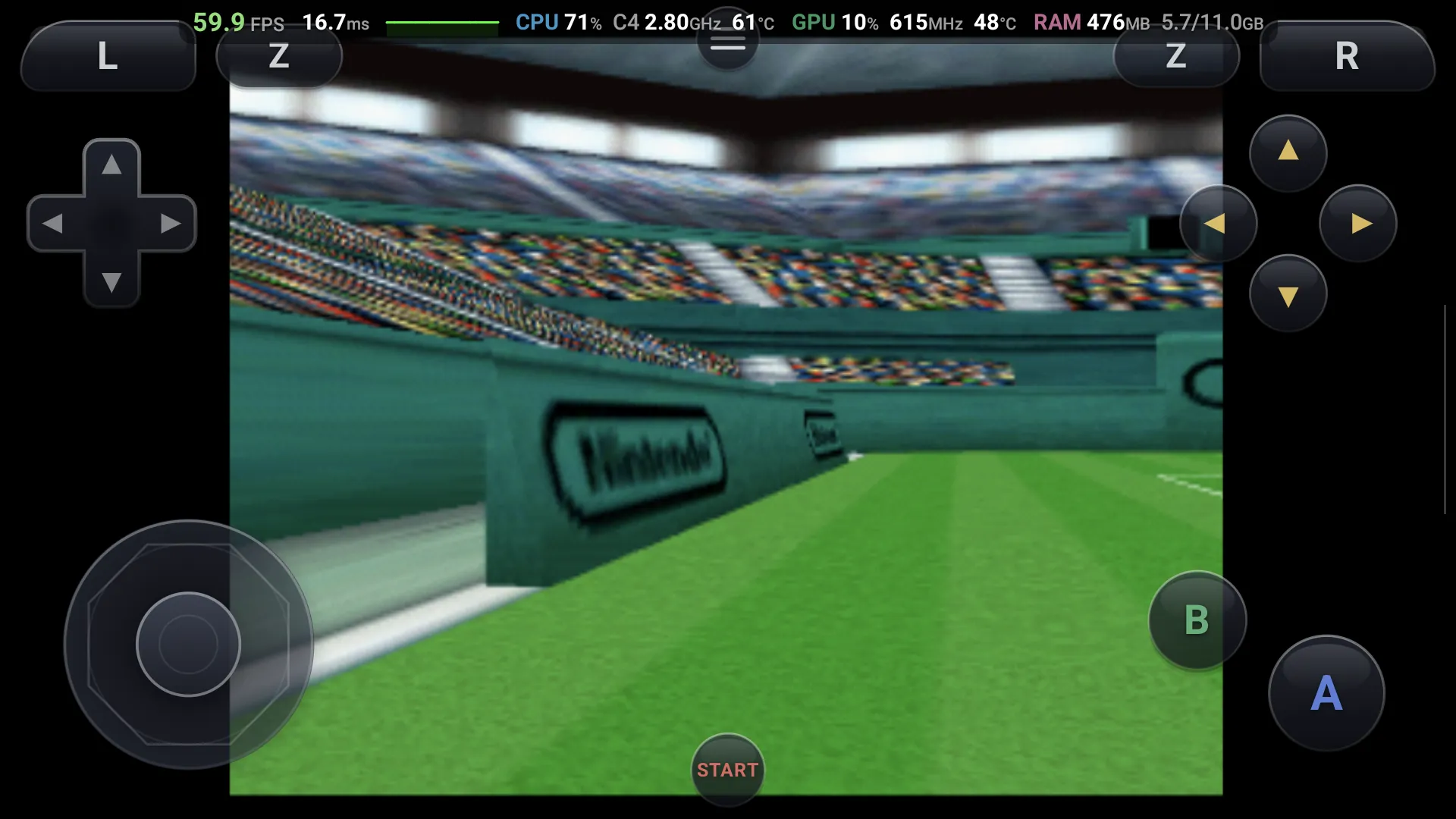
    Mario Tennis at 59.9 fps on a Retroid Pocket 6
    Mario Tennis on my Retroid Pocket 6, with the performance overlay from #5.
  4. 3 to 19 October 2026

    A clean-room PSP core

    Phobos couldn't adopt PPSSPP. It's under the GPL, and the console firmware ares compiles in can't be. So on 3 October Phobos started a PSP core from scratch, using PPSSPP only to learn how the PSP behaves, with nothing copied, translated or reworded.

    By 6 October, the first 3D games reached gameplay and a headless runner had put all 266 test games through a minute each (#154). A Vulkan renderer followed on 7 October.

    Library runs went round and round until only one game of 266 stayed black. v2.0.0 shipped the core on 11 October as Experimental, with 194 of the 266 reaching a menu or gameplay in its final run.

    On 16 October I timed real games' display lists on my PSP-1000. They took a hell of a lot longer than Phobos's model charged, 4 to 12 times as long. After more rounds, the measured timing became the default on 19 October (#269).

    GE time for one display list on my PSP-1000 and in Phobos's old modelBars for five game scenes. My PSP-1000's GE took 4.46 to 29.6 milliseconds per display list, where Phobos's old model charged 0.59 to 6.24.PSP-1000, measuredPhobos's model until #269Chains of Olympus, difficulty menu27.6 ms6.24 msGhost of Sparta, main menu29.6 ms4.05 msSuper Monkey Ball, Story Mode23.6 ms1.98 msKillzone, gameplay24.3 ms3.57 msActivision Hits, copyright screen4.46 ms0.59 msGE time for one display list on my PSP-1000 and in Phobos's old modelBars for five game scenes. My PSP-1000's GE took 4.46 to 29.6 milliseconds per display list, where Phobos's old model charged 0.59 to 6.24.PSP-1000, measuredPhobos's model until #269Chains of Olympus, difficulty menu27.6 ms6.24 msGhost of Sparta, main menu29.6 ms4.05 msSuper Monkey Ball, Story Mode23.6 ms1.98 msKillzone, gameplay24.3 ms3.57 msActivision Hits, copyright screen4.46 ms0.59 ms
    I measured these on 16 October 2026 with a GE profiler under custom firmware on my PSP-1000, against what Phobos's model charged then. Data from docs/progress/data.json.
  5. 3 October 2026 onward

    Back to the desktop

    Has since merged back to desktop in an attempt to port it back to allow for easier controller navigation/use, as well as a sleek, modern UI.

    Gary

    On 3 October the cores came back to the desktop on Linux, macOS and Windows, with CI building them for every pull request (#97). The PSP joined on 6 October.

    The desktop program is pretty plain for now, drawn in SDL's debug font. Like I said above, the goal is to bring the Android app's easy controller navigation and sleek, modern UI to the desktop.

    The library and menus already work with a gamepad, and #294 brought hotkeys to the desktop on 23 October, with a Hotkeys page in the pause menu.

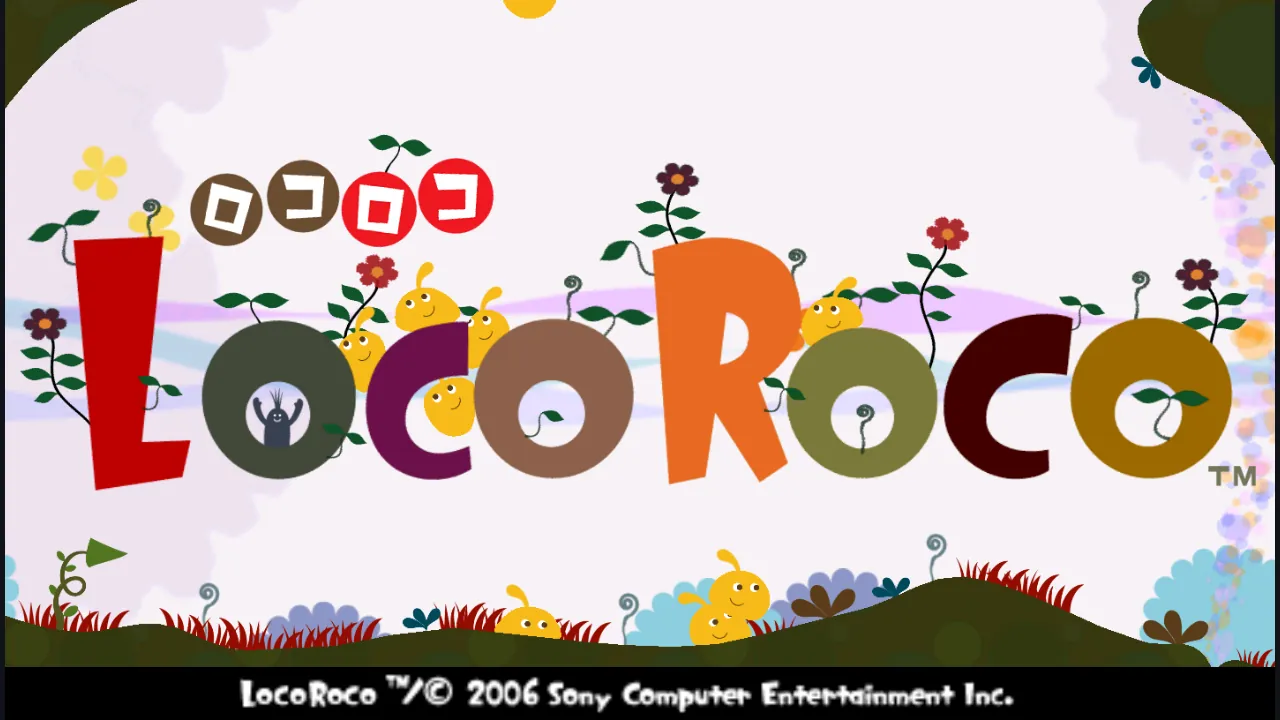
    LocoRoco's title screen in the desktop program
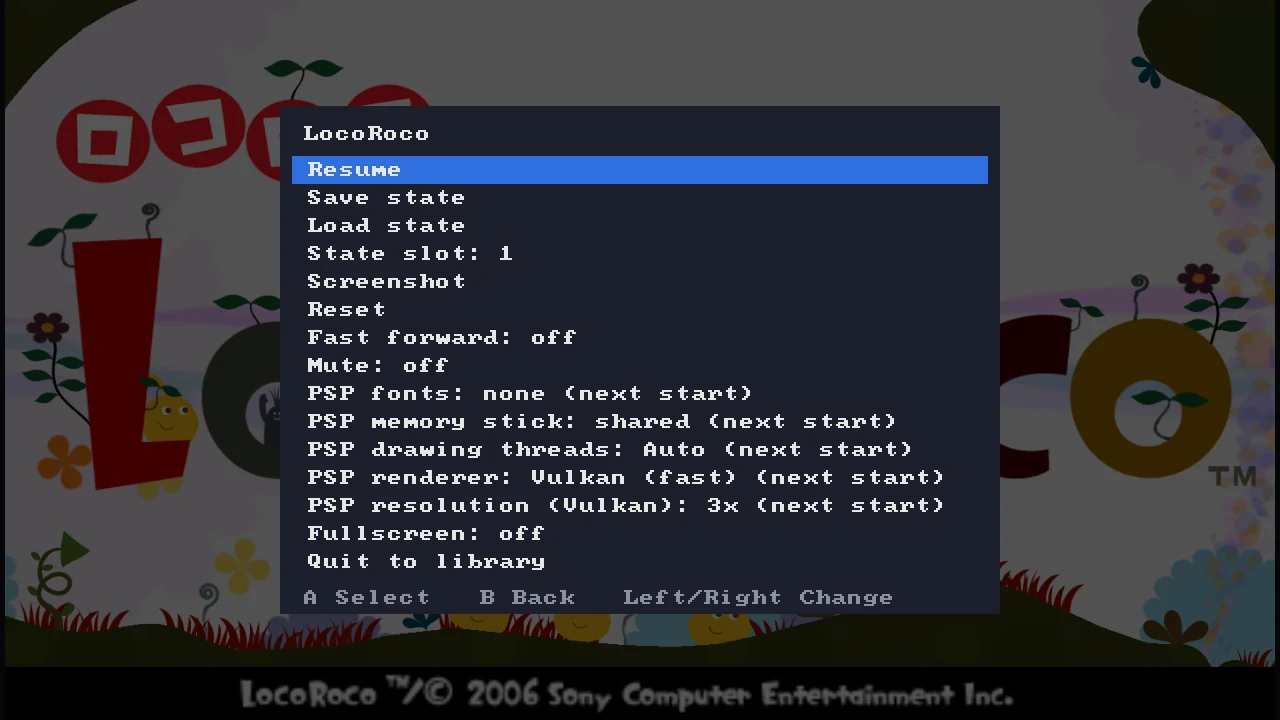
    The desktop pause menu over LocoRoco
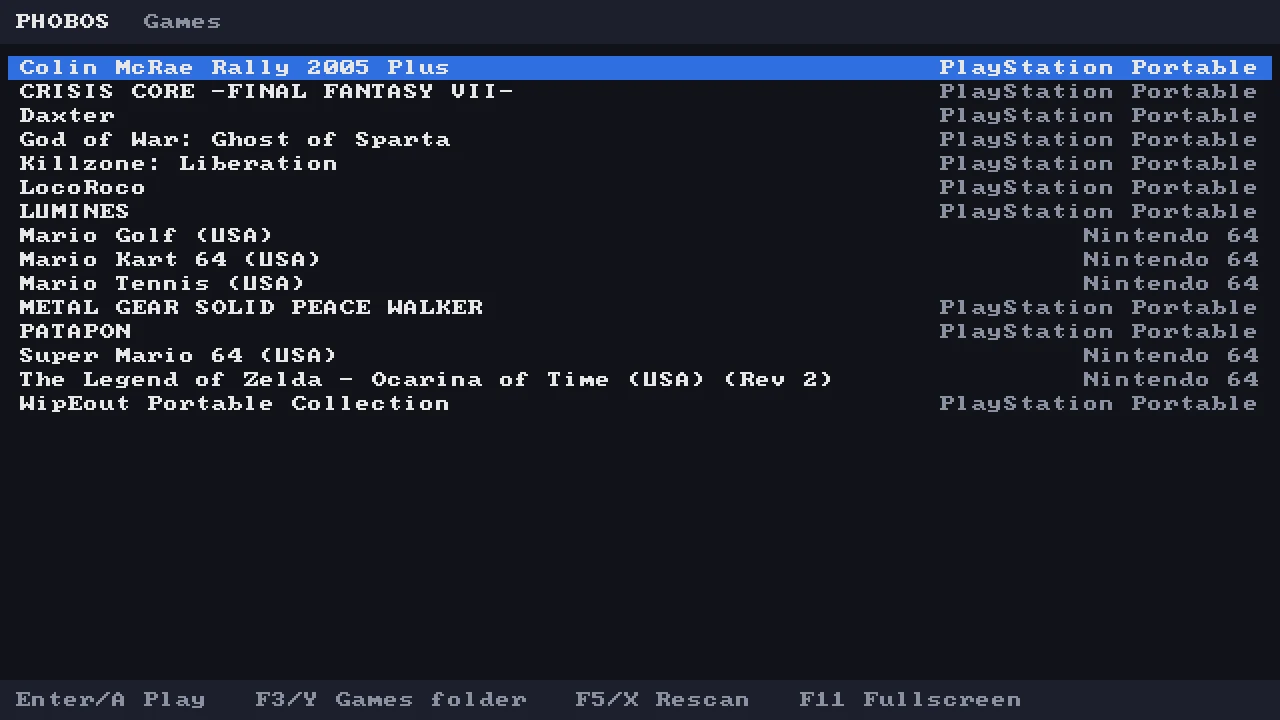
    The desktop library with PSP and N64 games
    The desktop program today, v2.4.0 on Linux.
  6. 26 October 2026

    Today

    Phobos has merged a shitload of pull requests since 24 September, 205 so far, and put out 7 releases in all. The PSP's GE now runs close to real PSP timing (#291), and N64 games draw on the RP6's stock driver (#292).

    The latest release is v2.4.0, from 16 Oct 2026. What's next is on the roadmap below.

Milestones

Timeline

The big moments so far.

  1. Era

    The ares line begins

    bsnes starts, later leading to higan and ares.

  2. Era

    Phobos forks ares

    To bring it to Android.

  3. A first

    Phobos runs on Android

    The 64-bit native app, with native Vulkan for the N64.

  4. Release

    v1.0.0

    Neo Geo, the GPU Driver Manager, PC Engine and SuperGrafx.

  5. Decision

    Ground rules

    Speed claims need measurements, and changes need independent review.

  6. A first

    First pull request merged

    A fix for Neo Geo CD's garbled menu text (#1).

  7. Milestone

    The N64 speed push

    Linked JIT blocks (#10), NEON in the RSP (#15, #16), more RDP contexts (#17) and less power (#18).

  8. Milestone

    The app gets its look

    37 themes (#9), the performance overlay (#5) and a glass look (#20).

  9. Release

    v1.1.0

    Pull requests #1 to #25, frontends that start games included.

  10. A first

    In-app updates

    Phobos updates itself from GitHub releases (#26).

  11. Decision

    A PSP core goes on the plan

    Aiming to rival PPSSPP in compatibility and speed.

  12. Milestone

    Controllers drive the menus

    The D-pad, stick and shoulder buttons drive the menus (#51).

  13. Era

    Back on the desktop

    Desktop builds (#97), and Phobos's own code goes GPL-3.0-or-later (#98).

  14. A first

    The PSP core's first code

    The CPU core and a first measurement on a real PSP.

  15. A first

    The PSP in the app at 60 fps

    PSP SDK samples run on my RP6, and on the host Lumines and Street Fighter III 3rd Strike reach their title screens.

  16. A first

    Full speed, and all 266 games run

    Peace Walker, Liberty City Stories and Lumines at full speed on my RP6, plus the runner's first pass over all 266 (#154).

  17. A first

    The PSP on the GPU

    A hardware renderer on Vulkan.

  18. Release

    v2.0.0, the first with the PSP

    The PSP core, Experimental, as one stack of about 100 pull requests (#208).

  19. Release

    v2.1.0

    Fixes from playing v2.0.0 on my RP6, and the PSP's system dialogs (#221).

  20. Release

    v2.2.0

    First speedups for the slow games, and fewer Vulkan stalls.

  21. Release

    v2.3.0

    Savedata, system fonts, God Eater 2 and CI lanes for the test plan.

  22. A first

    Measured on the RP6 before merging

    The headless runner comes to Android (#255).

  23. A first

    The whole library at 5x on the RP6

    No crashes in 266 games, and 232 averaged 59 fps or more.

  24. Release

    v2.4.0

    Polling loops skipped where exact, Vulkan depth and stencil, and EDATA and PGD files.

  25. A first

    Timing games on a real PSP

    Real games take 4 to 12 times what the old model charged.

  26. Milestone

    The GE gets a separate thread

    Exact, and off by default (#272), plus screenshots that hop into a folder (#273).

  27. Milestone

    Real PSP timing becomes the default

    The GE takes about as long as my PSP-1000 did (#269).

  28. Milestone

    The GE thread shows the frame

    #277 lands, and #290 fixes the N64 recompiler on x86-64.

  29. Milestone

    N64 on the stock Qualcomm driver

    No more black screen on the RP6's stock driver (#292), and Super Monkey Ball gets within 15% of the PSP (#291).

The dev logAll 205 merged pull requests, oldest first

What's next

Roadmap

What we're working on and what's next. No dates, since things ship when their reviews and checks pass.

In progress

    Next

    • Planned

      Automatic handover for the GE thread

      An Auto mode that hands over both ways, keeping a game synchronous where the two threads would only take turns.

    • Planned

      The screensavers redone

      The next part of my redesign of the app's look: its screensavers, with the CRT and XMB ones in the theme's colours.

    • Planned

      The Android app's interface on the desktop

      The desktop program's interface is a placeholder for now; I want it on a par with the Android app's.

    • Planned

      A matched N64 comparison with Mupen64Plus-AE

      Mario Tennis on Phobos and on the Mupen64Plus-AE build I supplied, with the same device, scene and settings, and each APK tied to its source.

    • Planned

      Tracing where the time goes, at low cost

      System traces first; only if they can't tell, an opt-in recorder whose own cost is measured, with the emulated timing left as it is.

    • Planned

      Measuring a frame's copies on its way to the screen

      Each step from the N64's video output to the window timed on its own, waits included; what it would gain is unknown.

    • Planned

      Counting the N64's waits for its graphics

      How often and how long it waits, timed against the GPU, with every wait kept in place.

    • Planned

      A clearer view of frame pacing

      Each frame's time split into sleeping, waiting, running and presenting, since frames per second alone isn't enough.

    • Proposed

      Measuring what the sound path costs

      Its allocations, lock time and dropouts measured before any change to its buffers, as an experiment that runs only if I approve it.

    • Started

      More of the N64's RSP vector code in NEON

      Two parts have merged; next, checking the code as built and the RSP's share of the CPU, then the other frequent vector instructions.

    • Planned

      Measuring the N64's video modes and fallbacks

      Counting mode changes, fallback frames and each mode's cost, with Mario Tennis and Rogue Squadron kept as regression checks.

    • Planned

      Measuring the N64's recompiler and data cache

      Sampling block exits, invalidations, cache activity and CPU share, with the sampling's own cost measured.

    • Planned

      Profiling the other systems

      The PlayStation, Super Famicom, Game Boy Advance, Mega Drive and others, profiled before any new recompiler or renderer.

    • Deferred

      Several controllers at once

      Each controller on a port of its own, with its own input and rumble.

    • Planned

      The N64's true frame rate in the performance monitor

      The frames a game draws, told apart from the rate the video signal scans out.

    • Deferred

      ZX Spectrum: tape swapping and a picker for ZIPs

      Swapping between a game's tapes, and choosing the file to load from a ZIP that holds several.

    • Deferred

      Dynamic speed compensation

      Scaling the emulated clock and sound to smooth games that run slow: a question of accuracy, not a speed-up.

    • Deferred

      Run-ahead, on systems other than the N64

      It needs each frame saved, run unseen and restored, which isn't practical on the N64; its switch stays hidden till then.

    • Parked

      A libretro host, for established emulators

      Parked: the emulators it would host are under the GPL, and the firmware ares ships, which I'm keeping, can't be.

    • Parked

      Dreamcast, NAOMI and Atomiswave

      Planned through Flycast, a GPL emulator, so it's parked while I keep the firmware ares ships.

    • Future

      The Saturn, eventually

      The recommended route is Mednafen's emulator, the most accurate open one, under the GPL; a core of Phobos's own would take years.

    • Suggested

      Nintendo DS

      Suggested rather than asked for: melonDS, under the GPL, with two-screen layouts and touch on the lower screen.

    • Proposed

      Arcade boards beyond the Neo Geo

      CPS-1 and CPS-2 first, then Sega's System 16 and 18 and CPS-3, ported from MAME's drivers in ares's style.

    • Proposed

      Smaller consoles and handhelds

      The Atari 7800, Lynx, 5200 and Jaguar, Virtual Boy, Intellivision, Vectrex, Sega Pico, 3DO, PC-FX, Odyssey², Pokémon Mini and Game & Watch, one task each.

    • Proposed

      Retro computers

      The Commodore 64, Amiga, Amstrad CPC, Atari ST, DOS, MSX2+ and turbo R, with on-screen and physical keyboards; lower priority.

    • Planned

      Automatic PSP speed comparisons

      Comparing the PSP core's speed by script, built on the reproducible PSP runs that have merged.

    • Planned

      Tests for the PSP's pictures above 1x on Vulkan

      Guarding high-resolution Vulkan output; two of the core's parts already test some frames above 1x.

    • Planned

      No more timing-sensitive thread tests

      Taking out the thread tests whose result depends on timing.

    • Planned

      Tests that old PSP save states still load

      Checking save states from earlier versions, once their layout settles.

    • Planned

      Measuring the real Android graphics driver

      On my RP6, after the automatic speed comparisons and the high-resolution tests.

    • Planned

      More replayable tests of the PSP's recompiler

      More tests that replay code through the recompiler and check it against a reference.

    • Planned

      Keeping the tests of the PSP's dialogs

      Tests of answering the PSP's system dialogs, its messages, keyboard and saves, kept in the suite.

    • Planned

      Tests that settings and controls are kept

      Making sure a change can't lose the settings and controls you've chosen.

    • Planned

      Tests of the Android app's launch and storage

      Covering how the app starts and how it uses storage.

    • Planned

      Tests that saves fail safely

      A shared helper for writing saves first, then tests of what happens when a write fails.

    • Planned

      Fuzzing the PSP core's inputs

      Random and edge-case input fed to the PSP core at its boundaries, to find what breaks it.

    • Planned

      Tests of the files each APK update relies on

      Checking that each build's update files are what the app's updater expects.

    • Planned

      Smoke tests of the packaged desktop builds

      Checking that the AppImage, the Windows build and the macOS app start, as they ship.

    • Deferred

      Tests guarding the N64's Vulkan lifecycle

      Not now: there's no way to test it short of a redesign.

    • Deferred

      The old CPU test harnesses restored

      Not now: they test cores nobody is changing.

    • Planned

      Measuring test coverage honestly

      How much of the code the tests reach, counted without inflating it.

    • Planned

      Automating the evidence each change needs

      Collecting the evidence for each change's review automatically.

    • Open

      A fresh Neo Geo compatibility pass

      A bounded pass over the games, since the fixes so far don't prove that every set works.

    • Deferred

      Shaders and a responsive layout

      Kept for later: shaders that apply in a game (the Shaders screen saves a preset but doesn't apply it yet), the polish around them, and a layout that adapts to the screen.

    • Parked

      A proper bypass of the N64's data cache

      Parked as high-risk: a first, direct version broke the console's memory transfers, so it needs a sound design.

    • Parked

      Per-game timing and cache overrides

      Parked until a measured need shows up, and then only with a review of the timing.

    • Deferred

      A recompiler for the PlayStation's CPU

      Wanted eventually, after profiling, with the interpreter kept as a fallback.

    • Deferred

      PlayStation graphics off the CPU

      Wanted eventually, in two parts: the simpler pixel copying, measured, then the riskier renderer.

    • Deferred

      A recompiler for the Super Famicom's CPU

      Profiling comes first.

    • Deferred

      A recompiler for the Game Boy Advance's CPU

      Profiling comes first.

    • Deferred

      A faster, optional take on the Mega Drive's video chip

      Wanted eventually, behind a setting of its own, after a review of its compatibility.

    • Undecided

      Accuracy or speed by default, on four systems

      Measuring what the accurate modes cost on my RP6, then choosing the defaults for the Super Famicom, PC Engine, Game Boy Advance and WonderSwan.

    • Planned

      More opt-in speed options for the N64

      Each measured on my RP6 first: skipping idle loops at normal speed, automatic frame skip and keeping the GPU's clock up, among others.

    • Deferred

      A recompiler for the ZX Spectrum's CPU

      Probably not needed, and profiling comes first.

    • Open

      MSX tapes: the load command typed for you

      Not done yet: for now you type the command that loads a tape yourself.

    • Open

      A Super Mario 64 hack that stops at boot

      B3313's v1.0.2 Hotfix 3 stays on a black screen; the first suspect is the N64 CPU's timer, which Phobos does differently from ares.

    • Open

      F-Zero ZX Overdrive's black picture

      It runs at full speed with steady sound, but its picture stays black, apart from a few dots.

    • Planned

      A README that shows what Phobos does

      The GitHub page rewritten with current screenshots, and what's outdated there replaced; not a priority yet.

    • Proposed

      Box art and game details in the Library

      An optional grid of box art, with each game's title, year, publisher and description, from a source whose terms allow it.

    Later

    • Planned

      Live switching for the PSP

      Changing the PSP's resolution and renderer mid-game, with no restart. The GE work it was waiting on has merged now.

    • Planned

      Vulkan (accurate), faster

      Getting the accurate Vulkan renderer closer to the fast one's speed on the handheld.

    • Planned

      Custom colour schemes

      Colour schemes of your own, beside the 13 themes.

    Thanks

    Credits and licences

    Phobos stands on a lot of other people's work. Here are the main pieces.

    • aresThe multi-system emulator Phobos is built onthe ares team, Near et al.ISC
    • higan and bsnesWhere ares came fromNear and contributors
    • paraLLEl-RDPN64 graphics on Vulkan, with Phobos's changesThemaisterMIT
    • sljitThe JIT compiler under the N64 and PSP recompilersZoltan HerczegBSD 2-Clause
    • libchdrCHD disc imagesRomain Tisserand, portions Aaron GilesBSD 3-Clause
    • SDL 3.2.30Window, input and sound for the desktop programSam Lantinga and contributorszlib
    • HIDAPIInside SDL's joystick code, on Linux, Windows and macOSAlan Ott, Signal 11 Software, and the libusb/hidapi teamBSD-style
    • FFmpegThe PSP's ATRAC3, ATRAC3plus and MP3 sound and H.264 movies, through libavcodec and libavutilthe FFmpeg developersLGPL 2.1
    • Vulkan-Headers and volkVulkan's headers and its loaderThe Khronos Group; Arseny KapoulkineApache 2.0 or MIT; MIT
    • MoltenVKVulkan on macOS, bundled in the macOS appThe Brenwill Workshop Ltd., for the Khronos GroupApache 2.0
    • SPIRV-CrossIts parser and its GLSL, MSL and reflection compilers, inside MoltenVKArm Limited, The Brenwill Workshop Ltd., Bradley Austin Davis and Hans-Kristian ArntzenApache 2.0 or MIT
    • AppImage runtimetype2-runtime, the part at the start of the Linux AppImage that mounts or extracts the restprobonopdMIT
    • libadrenotoolsCustom Turnip drivers on Adreno GPUsBilly LawsBSD 2-Clause
    • libc++, libc++abi, libunwind and compiler-rtLLVM's runtime libraries from the Android NDK, in the app, with compiler-rt in the macOS app tooLLVM contributorsApache 2.0 with LLVM Exceptions; MIT
    • sse2neonx86 SIMD intrinsics on ARM's NEONSSE2NEON contributorsMIT
    • MAMENeo Geo cartridge decryption and banking, the zoom table and the RTC protocolMAME contributorsBSD 3-Clause
    • ymfmYamaha FM sound chipsAaron GilesBSD 3-Clause
    • C-BIOSThe bundled MSX and MSX2 system ROMsBouKiCHi and the C-BIOS teamBSD-style
    • Systematic console iconsThe console art in the app's Library, recoloured for each themeBAXY Square, via RomMMIT

    Plus the LZMA SDK, miniz, Zstandard, xxHash, TZXFile, qoi/qon, puff, font-rs, the ZX Spectrum ROMs (redistributed with Amstrad's permission), Khronos's OpenGL and EGL headers (MIT-style), the MinGW-w64 runtime in the Windows build, the Android and Kotlin libraries, and the app's fonts (Press Start 2P, Galmuri, VT323, DotGothic16, Bangers, Comic Neue and M PLUS 1, under the SIL Open Font License). SDL 3.2.30 carries yuv2rgb, stb_image's JPEG decoder and SDL_rotate, and on Linux the X11 EDID parser and XSETTINGS client, imKStoUCS, code from xdg-user-dirs, the Wayland protocols and PipeWire's SPA header code. MoltenVK carries SPIRV-Tools, SPIRV-Headers and cereal, and the AppImage runtime links in musl, libfuse, squashfuse, zstd, zlib and mimalloc. The full licence for every component is in LICENSE.

    Licence

    Phobos's own code is under the GNU General Public License, version 3 or (at your option) any later version. The text is in COPYING. The components keep their licences, and the console firmware that ares ships isn't covered by the GPL.

    How it's made

    I build Phobos with AI coding agents and steer what they work on. Since September, an independent reviewer checks every change before it merges, and speed and accuracy claims come from measurements on my Retroid Pocket 6 and PSP-1000.

    Disclaimer

    Phobos comes with no games. Use dumps of games you own. Systems that need a BIOS beyond the firmware ares ships (see LICENSE) take one dumped from your own hardware. Phobos isn't affiliated with, endorsed by or sponsored by Sony, Nintendo, any other console maker or any game publisher. All product names, game titles and trademarks belong to their owners and appear here only to say what Phobos emulates and what each picture shows.